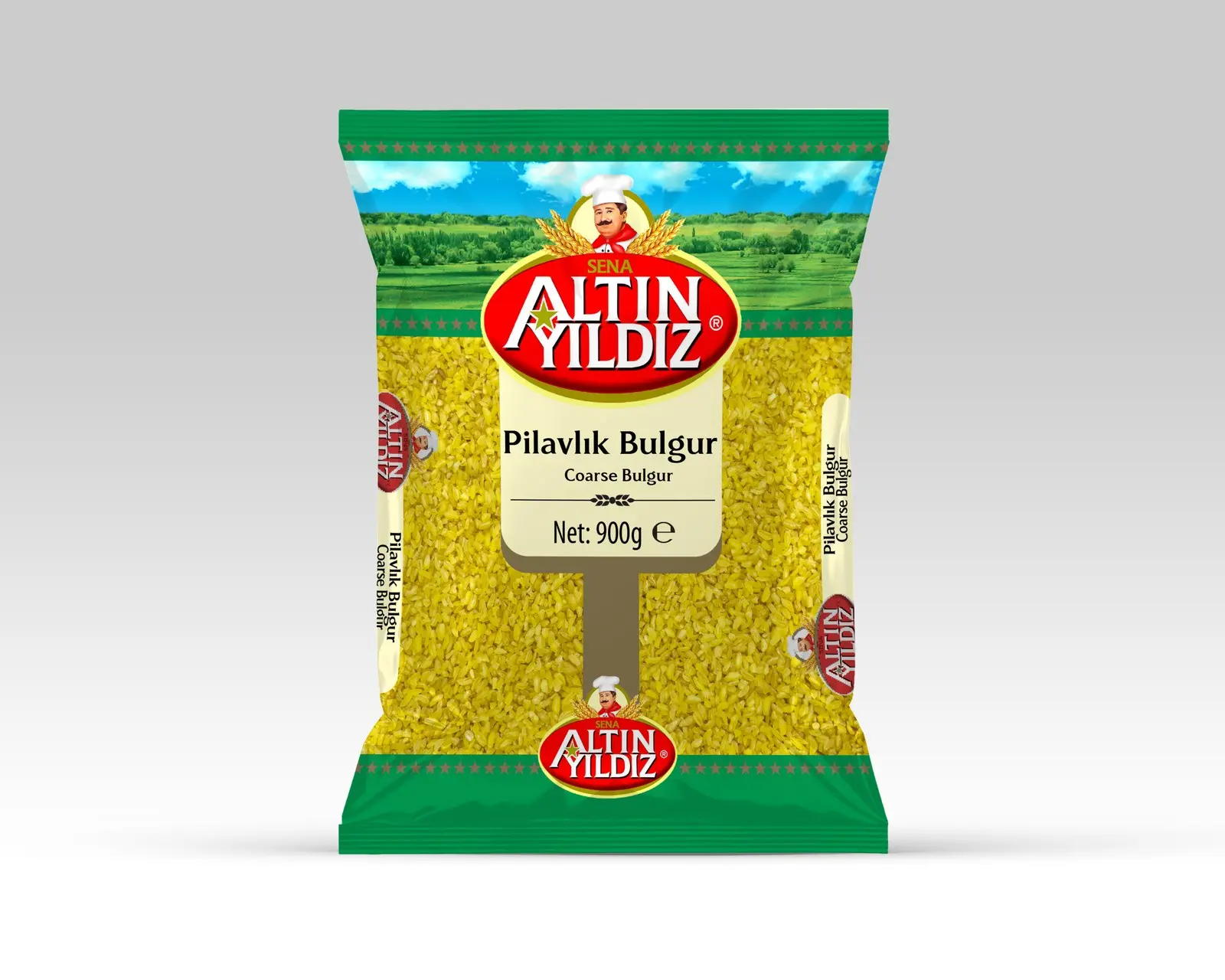
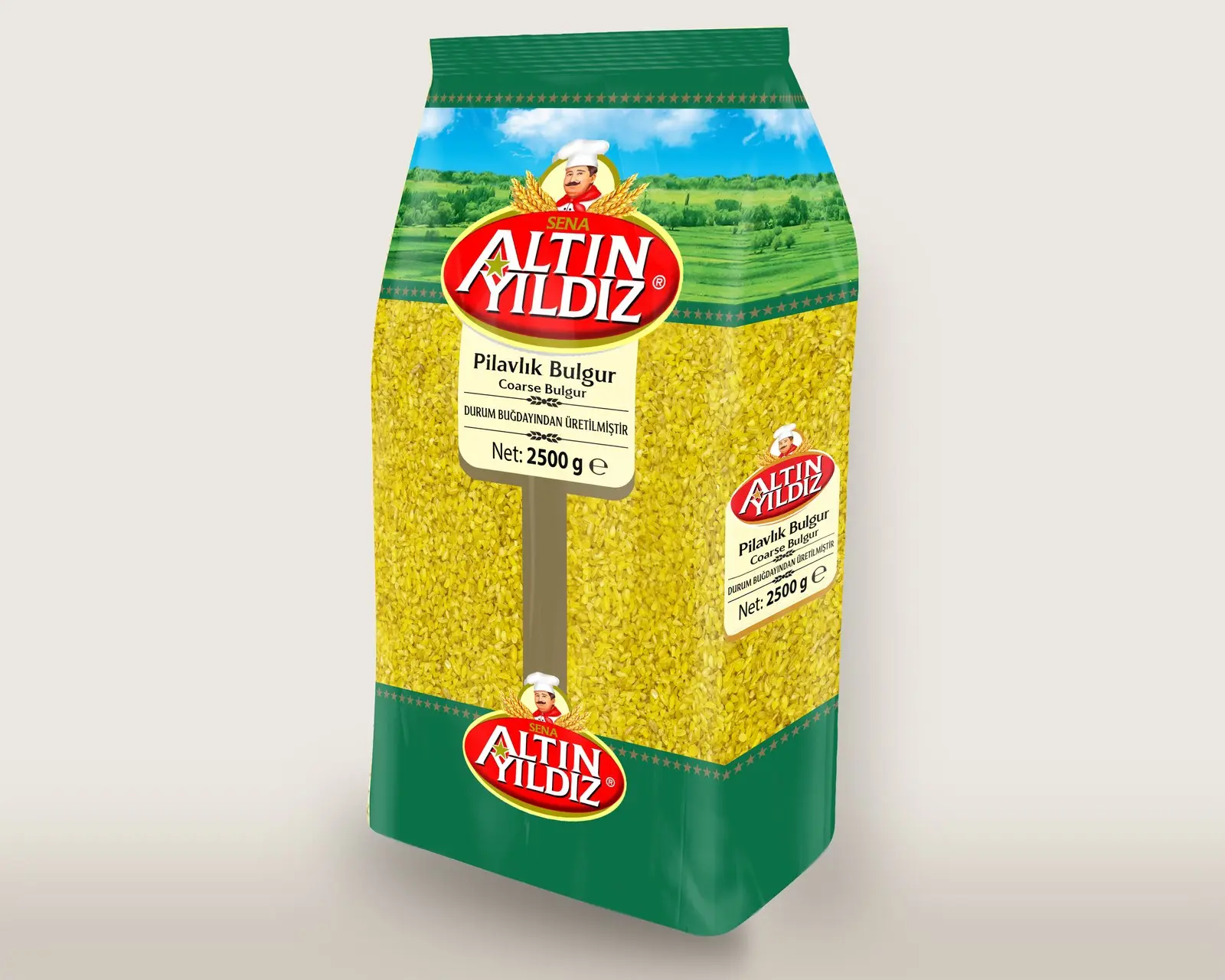
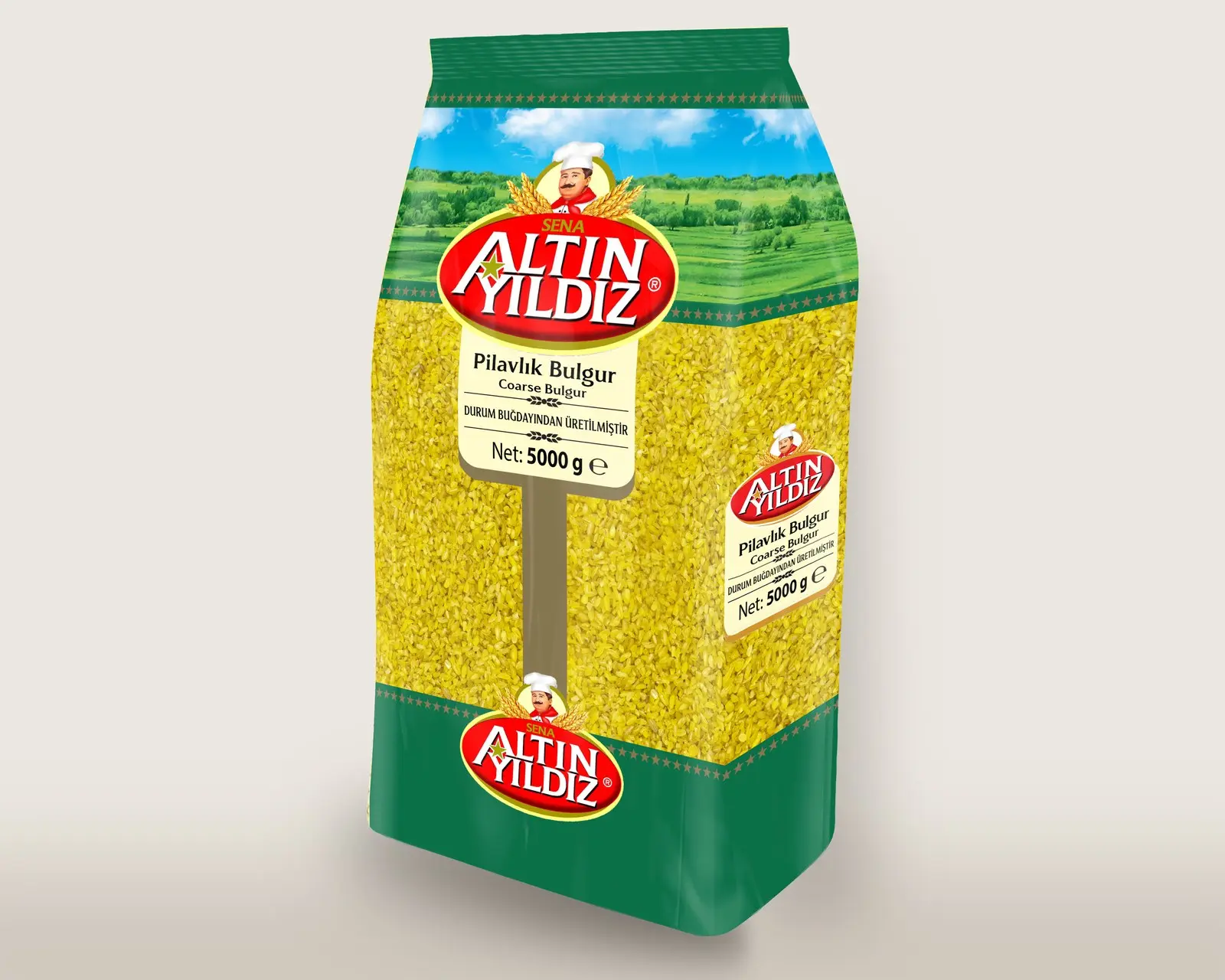
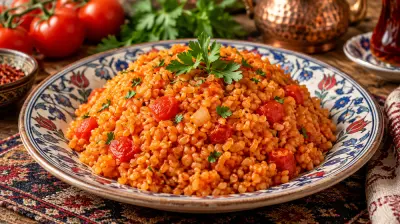
Wheat that has been boiled, dried, hulled and then cracked to a coarse grind. Because it keeps most of the wheat’s own fibre, it is more filling than rice pilaf. The grains stay large when cooked and do not turn mushy.
Nutrition Facts (per 100 g dry bulgur)
| Nutrient | Amount |
|---|
| Energy | 342 kcal |
| Carbohydrate | 75.9 g |
| Protein | 12.3 g |
| Fat | 1.3 g |
| Fibre | 18.3 g |
| Sugar | 0.4 g |
| Sodium | 17 mg |
| Potassium | 410 mg |
| Calcium | 35 mg |
| Iron | 2.5 mg |
| Magnesium | 164 mg |
| Phosphorus | 300 mg |
| Zinc | 1.9 mg |
| Folate | 27 µg |
Product Benefits
| Benefit | Description |
|---|
| Keeps you full for longer | Far higher in fibre than rice; it delays hunger. |
| Provides plant protein | About 12 grams of protein per 100 grams. |
| Releases energy gradually | Digested slowly, so fullness comes steadily rather than all at once. |
| Rich in minerals | High in magnesium, phosphorus and iron. |
| Practical | No soaking needed; it cooks quickly. |